Showing posts with label national park. Show all posts

Thursday, 13 November 2014

Bako National Park (National Park)


Bako National Park

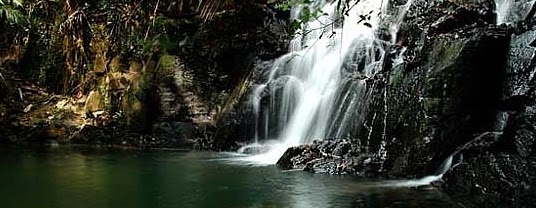
With its rainforest, abundant wildlife, jungle streams, waterfalls, interesting plant life, secluded beaches, panoramic rocky shoreline, bizarre rock formations and extensive network of trekking trails, Bako National Park offers visitors an excellent introduction to the rainforest and coastline of Borneo. Bako may not have an instantly recognisable star attraction, but there can be very few places in the world that pack so much natural beauty into such a limited area, all just 37 km from Kuching. Its accessibility - and its sheer range of attractions and activities - have made Bako one of the most popular parks in Sarawak.

Gazetted in 1957, Bako is Sarawak’s oldest national park, covering an area of 2,727 hectares at the tip of the Muara Tebas peninsula. It is one of the smallest national parks in Sarawak, yet one of the most interesting, as it contains almost every type of vegetation found in Borneo. The well-maintained network of nature trails - from easy forest strolls to full-day jungle treks – allows visitors to get the most out of this unique environment.

Bako contains an incredible variety of plant species and vegetation types, and this is one of the park’s great attractions. At Bako it is possible to see almost every type of vegetation found in Borneo. 25 distinct types of vegetation form seven complete eco-systems - Beach Vegetation, Cliff Vegetation, Kerangas or Heath Forest, Mangrove Forest, Mixed Dipterocarp Forest, Padang or Grasslands Vegetation and Peat Swamp Forest. It is easy to explore these eco-systems via the jungle trails. The contrasts are so distinct that you do not have to be a scientist to notice the differences. Furthermore, most of the different vegetation types are found close to the park HQ at Telok Assam
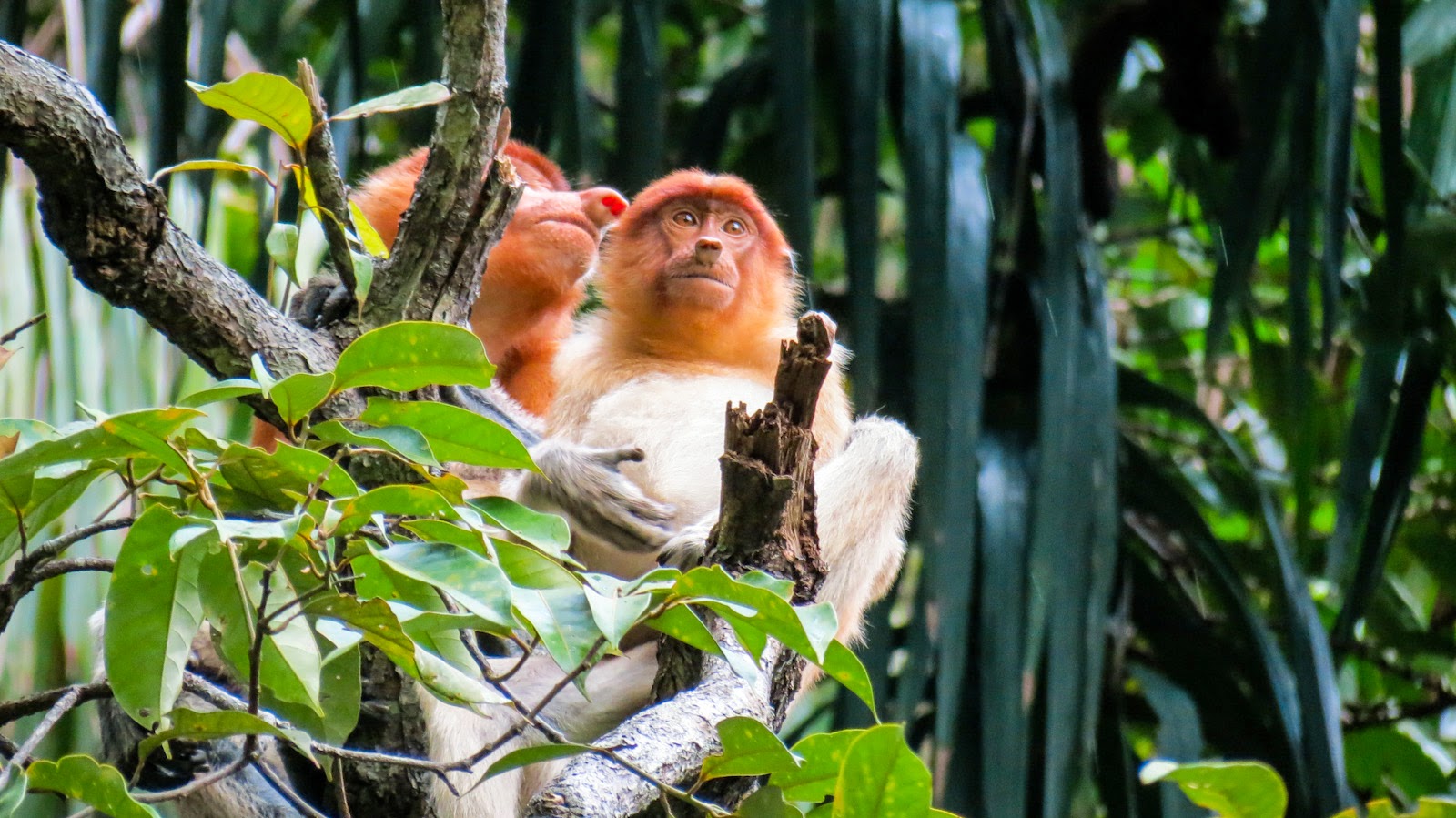
The best times for seeing wildlife at Bako are just after dawn and just before dusk, when the animals are at their most active. You are more likely to see animals on the trails if you go in small groups, walk slowly, keep as quiet as possible, and listen out for sounds and movements in the forest. For example, you are likely to hear a strange grunting sound or the crash of leaves long before you actually see a proboscis monkey.

Bako is a fascinating place for bird watching, as over 150 species have been recorded here. Although many of these can be seen around the accommodation area, you need to hit the trails to appreciate the full variety of Bako’s bird life. The mangroves at Telok Assam are an excellent place to start. Serious bird watchers should take a good pair of binoculars and thePocket Guide to the Birds of Borneo, which is widely available in Kuching.
Rock pools and mangroves are good places to search for small animals such as mudskippers and crabs, especially sky-blue fiddler crabs and shell-dwelling hermit crabs. Bako also has its fair share of insects. Watch out for them on the forest floor and hear them everywhere.

·         Entry Fees & Permits

There is a nominal entry fee for all National Parks in Sarawak. Check with the National Parks Booking Office in Kuching for the latest fee structure. A permit is required for professional photography or filming, which should be arranged in advance with the National Parks Booking Office.

 Getting there

From Kuching, take a taxi or Petra Jaya Bus No. 6 to Kampung Bako (Bako Village). The journey takes approximately 45 minutes. Boats can be chartered at the National Parks Boat Ticketing Counter next to the jetty for the 30-minute boat ride to the Park HQ whilst registering your arrival at the Park Arrival Booth. Check with the National Parks Booking Office in Kuching for the latest boat fares. Local tour operators also organise guided trips to Bako.

·         Accomodation

Park accommodation consists of 3-bedroom Chalets, 2-bedroom Lodges, 4-bedroom Hostels and a camping ground. Barbecue pits are provided for visitors to prepare their own meals. Please contact the National Parks Booking Office for the latest room rates and to make reservations.


Tuesday, 11 November 2014

Endau Rompin National Park (National Park)


Endau Rompin National Park

Endau Rompin, straddling the Johor/Pahang border, is the second National Park after Taman Negara. It covers an area of approximately 80,000 hectares of rich and exotic flora and fauna, encompassing the watershed of the rivers Endau and Rompin, from which it derives its name. In other words, this place is huge. 


The park is home to a vast species of birds, mammals, frogs, insects and exotic varieties of orchids, herbs, medicinal plants and trees. It seems that every time a scientific expedition returns from Endau Rompin, they discover a new species! 

Regular treks through the jungle will give adventurers sightings of leaf monkeys, long-tail macaques, white- handed gibbons, elephants, deer, tapirs and the occasional tiger and leopard. For adventure lovers and river trekkers, there are exhilarating rapids and fairly substantial waterfalls. 

To protect the pristine environment, only limited areas of the park are open for ecotourism. Entry to the park requires a special permit from the Johor National Park Corporation.


·         What to see at the park

Just like Taman Negara there are many wildlife species that live in the park, chances on spotting them are slim as they have ample space to roam around within the park boundaries. The national park is known for having the largest remaining population of the highly endangered Sumatran rhinoceros. Other animals that live in the national park are the white-handed gibbon, Malaysian tiger, Asian elephant, wild boar, tapir, slow loris, deer, long-tail macaques and leopards. Among the many bird species that live in the park are the hornbills and kingfishers. As most of the animals know how to evade visitors it is more common to spot insects, spiders and the occasional snake.

·         Three ways to enter the national park

The national park has three main entry points, two located within the state of Johor and one within the state of Pahang. The two entry points in Johor are mostly used by visitors. At the eastern side of the park you have the Peta entrance, nearby Mersing so good to combine with a visit to Tioman Island of one of the surrounding tropical islands. This park entrance is most used by visitors. Travelers that come from Kuala Lumpur also enter the park at the Peta entrance. The Selai entrance, southwest of the national park, is the least accessible entrance. At this side of the national park you will find a huge amount of beautiful waterfalls. In this area most of the remaining tigers and elephants live. Do know that the last part of the trip to the park is over inaccessible roads; you need a 4x4 to travel to any of the three park entrances which you can arrange beforehand via the Park HQ.

·         Attractions

There are many activities and attractions at Endau-Rompin National Park to keep you busy for at least 3 or 4 days. Among the most popular attractions are; jungle trails, a visit to the Orang Asli (Jakun tribe) village, rubber tube rafting, night safari (walk or by 4x4), numerous fantastic waterfalls, a few beautiful lakes and river cruises.

·         Accommodation

You can stay at the chalets (RM100/RM150) or dormitory at Endau-Rompin Park Headquarters. As there is no aircon, it is advisable to bring along mosquito netting. Also make sure to bring along enough mosquito repellant. There are also a few campsites in the area; you can rent a tent at Park HQ (Peta) for RM40 per night.

·         Best time to visit Endau-Rompin

The national park can be visited from April to October and is closed during the monsoon season (November to March). This is the same monsoon that renders islands like Perhentian,Redang and Tioman (relatively nearby Endau-Rompin) nearly inaccessible.


Sunday, 2 November 2014

Taman Negara (National Park)


Taman negara

Taman Negara National Park is the perfect place for travelers who love wild life viewing, jungle trekking, hiking, rock climbing, fishing, camping and many more. It is well established as one of the most popular ecotourism in Malaysia. Every year Taman Negara attracts thousands of local and international travelers. It has a tropical, humid climate with temperatures averaging 86°F (30°C). It is opened throughout the year.Taman Negara located at central part of Peninsular Malaysia. With total coverage area of 4343 km square, it takes three (3) states, Pahang, Kelantan and Terengganu. Pahang is the largest at 2,477 km square, followed by Kelantan at 1,043 km square and Terengganu at 853 km square.
There are 3 entrances to Taman Negara namely (1) Kuala Tahan, Jerantut, (2) Sungai Relau, Merapoh (3) Kuala Koh, Gua Musang. Kuala Tahan is the most established and popular among local and international tourists. Kuala Tahan is about 240 km from Kuala Lumpur city center or estimated 3 – 4 hours driving.

Kuala Tahan is connected by road system to and from Jerantut, Kuala Lumpur, Kuantan, Kota Bharu and Pulau Pinang. Train system, to and from Kluang, Johor and Kota Bharu, Kelantan. Boat system, to and from Kuala Tembeling to Kuala Tahan via Sungai Tembeling.

·         Attractions and activities at Taman Negara

Once in the park there are many fun things to do. Walking excursions are usually under accompaniment of a guide, he will take you into the jungle. There's also the famous Taman Negara Canopy Walk; this is a 510 meters long suspension bridge between high treetops (arguably the longest in the world). You can walk over it, and enjoy spectacular views at heights of over 45 meter. 

A night walk is a very nice to-do at Taman Negara; but make sure you wear mosquito repellant and clothes with long sleeves and long trousers. Special socks against leeches are not really necessary; you can always pull them off you bottom legs after your trip (unless you cannot handle some minor blood). Other activities and attractions within the national park are bird watching, staying overnight in one of the wildlife observation hides, adventurous cave explorations (i.e. Gua Telingga, Gua Kepayang, Gua Luas, Gua Landak and Gua Tumpat) river cruises, Lata Berkoh with its waterfalls, fishing (Taman Negara offers great fishing opportunities for anglers), enjoying the scenic views after climbing to the summit of Mount Tahan (multi-day jungle trek) and visiting the Orang Asli (Batek and Semokberi) people in their villages.

 Tips for Visitor at Taman Negara

 Visitors are reminded that, as protected National Park, nothing is to be damaged in or taken out of Taman Negara. When jungle trekking, find out and choose a trail that you can complete before dark. Do not stray off the trail-the rainforest is dense and you can easily lose your orientation away from paths.  Always let a responsible person know of your plans for the day especially if going alone. Enter the jungle with a sense of respect and humility. Be as quiet as possible to avoid alarming other beings. Take plenty of water and some snacks. Unless trekking with a day guide, it is not advisable to eat jungle fruits or drink from any water source.

Wear light, loose clothing, comfortable long sleeved shirts and long pants for protection from insects, leeches, thorny plants and abrasions. Wear roomy, light but sturdy footwear with good ankle support and traction, and two pairs of socks to prevent blister for long treks. A hat with a wide brim to shade again intense sunshine and light rain is advisable. For longer treks pack a poncho or other rain gear. When going camping, pack as light as possible. Use a comfortable rucksack with padded shoulder straps, hop belt and internal frame.  Bring a map and compass for navigating deeper jungle trails-under some dense jungle canopies the sun might not be clearly seen. A whistle is a useful tool for attracting attention in emergencies. 

 In certain conditions, the forest can get very cold-bring a waterproof jacket for comfort. A basic first aid kit for treatment of wounds and bites is advisable.  For longer trips, bring extra batteries for your torchlight; candles and matches.  Choose a clear camping site free of debris and away from rotting trees. During rainy periods, do not camp too near a river-pick a higher spot.  Leave nothing but footprints, take nothing but memories!!


Friday, 24 October 2014

Gunung Mulu National Park (National Park, Mountain)


Gunung Mulu National Park

Gunung (Mountain) Mulu National Park is a lush tropical jungle home to longest network of caves and magnificent pinnacles situated in Mulu, on the island of Borneo, the State of Sarawak, Malaysia. The park was granted UNESCO World Heritage Site status in 2000 because of its biological significance and limestone karst features.The park is also dominated by three mountains, Gunung Mulu 2,376m, Gunung Api 1,750m, Gunung Benarat 1,585m where more experienced cavers can arrange for challenging caving activities here

Getting to Gunung Mulu National Park

Because of its geographical location, the only practical way of getting to Mulu is by air. MASwings, a subsidiary company of Malaysian Airline Services operates direct flight to Mulu from Kota Kinabalu, Kuching and Miri flying on ATR72-500 aircraft. If you really love nature and can’t depart from it, you may choose the much longer route through the river from Miri, which will take 10 to 12 hours of boat ride, where as the plane takes only 30 minutes.

Where to eat and sleep

There are 3 types of accommodations to choose from if you start your activities from the park Headquarters (HQ). Royal Mulu Resort offers 3-star resort accommodation sits in the middle of rainforest only 5 minutes drive to the park. This place is suitable for honeymoon treat, family vacation and travelers travelling on higher budget seeking for resort activities, nature and comfort. Buffet breakfast and dinner are usually included in the package. A la carte menu is only available during lunchtime. There’s also one small privately run restaurant outside the resort.

National Park HQ provides accommodations within the park area as well. This is the most convenient way of exploring the park without any transportation arrangement and you need to pay park entrance fee RM10 (USD3) one time only on the first day. Re-entry fee is chargeable on daily basis to those who stay outside the park.  Foods are easily available at Cafe Mulu which owned by the park.
There are upcoming privately run lodges outside the park area. Mulu River Lodge is one of them, literally a stone throw away from the park entrance is offering RM35 per bed inclusive of breakfast. It has long house concept with a role of single bed arranged against the wall and certain sections have curtains served as partitions. Next to the lodge is Sweetwater Restaurant runs by the same owner serving local food, local rice wine and beer. Currently bookings are only available via the phone or walk-in.

Best time to visit

Mulu National Park is open all year round. You can’t possibly avoid the rain because it is sitting in the tropical rainforest and it rains almost 280 days per year in Mulu.  So there is no perfect timing to visit except to coincide with the blossoming season in June-September (can be considered the driest months), where you’ll see more birds and animals around. Do bear in mind of the great influx of tourists and booking ahead is necessary for guides and accommodations especially for independent travelers.

·         Experiencing UNESCO World Heritage Site

Caves: Mulu National Park is famous for its four show caves (Deer, Langs, Clearwater and Wind). Each caves are unique and has its own beauty. Deer Cave is the largest cave in the world and home to over millions of bats and swiftlets. If the weather permits, visitors may witness bat exodus at bat observatory outside Deer Cave in the evening. During my visit, the bats didn’t come out for 2 days and only managed to see it on the 3rd day. As the name suggests- “show caves”, the normal route leading to the caves are accessible by the convenience of concrete pathway and wooden plank walkway. Very tourists-friendly and I mean extremely tourists-friendly despite the flight of stairs you have to climb. If you’re up for squeezing between rocks and getting yourself dirty, you MUST go for adventure caving ranging from introduction, intermediate and advanced level to avoid extreme disappointment.

Nature Walk: There are few sites cater for short day trips out from Park HQ. Discover the world’s longest canopy walk (480meters), night walk along Kerangas and Lowland Riverine Forest, medicine plant trail, Paku waterfall and trekking through the Camp 1 trail. If you pay closer attention to your surroundings, you’ll find these living organism around you (as shown above).

Boat Ride: You may experience the longboat ride going to the Clearwater and Wind Caves. The boat stops at Batu Bungan Village, a Penan longhouse settlement and a small handicraft market is open everyday except Sunday. Besides that, make a trip down to Long Langsat stream and enjoy the crystal clear river and a swim.
Challenging Treks, Trails and Climbs: There are 3 challenging overnight trekking activities to choose from,The Pinnacles, The Headhunter’s Trail, Gunung Mulu Summit Trek. An alternative to climbing can be replaced by Kerangas Forest Walk or Melinau Gorge from Camp 5.

·         Arranging your trip

You may arrange your trip with tour operators or directly arrange with the Park HQ. Bookings are necessary to avoid disappointment as some of the activities must be accompanied by guides. If you’re on a budget, independent tour (booking directly with the park) is possible and can be done at a much lower price.  If you plan to stay with Royal Mulu Resort and looking for convenience, the resort will take care of that through their activities tour packages.

Thursday, 16 October 2014

Niah (National Park)


Niah National Park

One of the main attractions in Miri - Niah Caves is located on Sungai Niah or Niah River. It is situated around 3km from the small town of BatuNiah and is situated an estimated distance of 110km from Miri city. Niah Caves is located further down to the road from Lambir Hills National Park.
The huge Niah Caves was gazette as a National Park in the year of 1975. The cave consists of one big cave with the name of (The Great Cave) and several smaller caves including the popular Painted Cave and The Large Chamber or Padang. The Great Cave is easy to access as there are plank walks built for tourists to walk on. While walking all the way into the Great Cave, different species of trees and plants with beautiful tropical rainforest are to be seen around you. Wildlife is to be seen around too such as lizards, butterflies and various kinds of birds flying just above you. If you are lucky, you may spot one or two hornbills.
After you went deep into the Great Cave, you can hear birds chirping and see the bird nests above the corner of the caves. After a back passage of the Great Cave, you lead yourself to The Painted Cave. In the Painted Cave, there are paintings carved all over on the wall of the caves and the ancient burial site of the 'death ship' is in the cave. The 'death ship' is the boat - like coffins that were used to contain the bodies of the dead back in those years. The 'death ship' has been transferred to Sarawak Museum and so what is left to see there is the burial ground of the coffins. If you were to visit the caves during August to December and January to March, you most probably have the chance to experience and watch how the locals collect the birds' nests with very high bamboo ladders. Niah Caves is definitely a perfect place for nature lovers and will work well as a one day trip.
Most visitors make their visit to the Niah Caves as a one day trip. However, if you want to explore more of the caves, there is accommodation offered in the National Park. Well equipped chalets and dorms are up for your selections to spend your nights. You do not even have to worry of your food as there is a cafeteria which offers local and western cuisines. If you want to get some junk food or can food, you can go for a walk in the shopping malls in Miri town. There are quite a number of shopping malls around such as Boulevard Shopping Mall, Imperial Mall and Bintang Mall.

How to get there
As Niah Caves is located between Miri and Bintulu, you can take a taxi to the National Park in either city. From Miri, take the bus Suria from Miri Bus Station. The ride is about 2 hours tops. From Bintulu, take also the bus Suria from Bintulu Bus Station. However, the ride from Bintulu will be longer at around 3 hours tops.

URL:


Friday, 10 October 2014

Lambir hills, miri serawak (National Park)


Lambir Hills National Park
The famed Lambir Hills National Park is located along the Miri-Bintulu road, 36 km south-west of Miri town in Sarawak, East Malaysia. It was gazetted as a park in 1975, and covers an area of 6,952 hectares. 


There are around 1,173 tree species in the park alone, with 286 genera and 81 tree families making Lambir one of the more diversified forests in Malaysia. Wild animals can also be found in the deeper parts of the park, especially monkeys, sun bear, pangolin and bats. 


It is best to visit the park in the morning, as there would be ample time to go along the various trails in the park. The main attraction of the park is its beautiful waterfalls, the nearest just a mere 0.18 km is Latak Waterfall. It is a 20 minutes walk from the Park office. If you stop to look at the wonderful forest flora and fauna along the way, it would probably take longer. 


Before entering the park, register yourself at the Park office where the guide will explain some necessary safety rules before entering the park. If you are going to the waterfalls further ahead, it is best to go early in the morning as the journey will take several hours.The guide will also advise that visitors to the park exit the park grounds by 5 pm as the gates to the park will be closed at this time. 


Other waterfalls in the park are ones on the Pantu trail such as the Pantu and Nibong waterfalls. It takes up to two hours journey to reach the falls. Then there are the Pancur, Tengkorong and Dinding waterfalls along the BakamTrail.The other primary trails are Main and Lepoh-Ridan. There are other trails in the park, of which further information can be obtained from the park office. 


There is even a 22-metre Tree Tower is situated on the Pantu Trail, about a kilometre from the Park Office. Visitors can climb and view the scenic Dipterocarp forest profile. It is also an excellent place for bird watching. 


Come visit Lambir Hills National Park and experience one of natures best natural wonders.


How to get there

By Air

Malaysia Airlines dan Air Asia flies to Miri on a daily basis.


By Road


Lambir Hills National Park is about a 30 minutes drive from Miri Town, via the Miri- Bintulu road. There are public transportations to the park from the city. Visitors can also opt to take the commercial buses en-route to BatuNiah, Bintulu, Tinjar, Bakong or Bekenu bazaars. The buses depart from WismaPelitaTunku in Miri. Visitors may opt to join organised trips from travel agents departing Miri city early in the morning, and returning to Miri after lunch.